Domhanda: Tugann Píosaí Síolta 1.5–2.5 Unsa na Torthaí is Fearr i bPlandáil Prátaí
Príomh-earraí beir leat
- 1.5–2.5 oz seed pieces give the best returns (Idaho)
- 50–60 cwt/acre average yield loss from undersized seed
- 2.5–3.5 stems per plant is optimum for Russet Burbank
- 70% of seed pieces should weigh 1.5–3 oz (Univ. of Maine)
Cén fáth a bhfuil sé tábhachtach
- D'fheirmeoirí
- Grade cut seed so at least 70% of pieces weigh 1.5–3 oz; run a 100-piece grow-out test 3–4 weeks before planting to check stems.
- Do phróiseálaithe
- Agree seed size and stem targets with contract growers, as stem number drives tuber count and final tuber size.
- Do sholáthraithe
- Offer seed graded by size and state its physiological age; storage at 38°F (3°C) slows ageing and keeps stem numbers lower.
Achoimre 60 soicind
Getting seed size right is a low-cost way to protect potato yields. Extension research from Idaho and Maine converges on pieces of roughly 43 to 71 grams, with larger cuts for Russet Burbank and little gain beyond about 2.5 ounces. Small seed is the bigger danger: one tenth of seed weight below an ounce leaves a fifth of the field underpowered, and Idaho growers lose 50–60 hundredweight per acre on average, around 6 t/ha. Size also drives the seed bill, which climbs from about 18 to 30 hundredweight per acre as pieces grow from 1.5 to 2.5 ounces. Stem count, shaped by physiological age, then decides how many tubers set and how big they get, with 2.5–3.5 stems ideal for Russet Burbank. Seed growers, cutters and buyers of seed all benefit from grading and a pre-planting grow-out test. Caveat: the Idaho bulletin dates from 1995, and targets differ by variety and market.
Seed piece size is one of the cheapest yield levers in potato growing. In most cases, pieces of 1.5–2.5 ounces give the best returns, according to a University of Idaho bulletin. That is about 43–71 grams. Above about 2.5 ounces, the benefit of larger pieces diminishes.
University of Maine Cooperative Extension gives a similar range. It recommends 1.5–2 ounces for most varieties. For Russet Burbank, pieces should average slightly larger, at 2–2.5 ounces. Growers should avoid pieces smaller than 1.5 ounces or larger than 3 ounces. At least 70% of pieces should fall within 1.5–3 ounces.
The cost of small seed
Small pieces carry limited reserves. The Idaho bulletin gives an example. If just 10% of seed by weight is under 1 ounce, about 20% of the planted area has weak pieces. Undersized seed reduces yields in Idaho by an average of 50–60 cwt per acre. That equals roughly 5.6–6.7 t/ha.
Laethanta na seachtaine. Díliostáil le cliceáil amháin.
Seed size also sets the seed bill. The Idaho bulletin lists seed rates at 9-inch spacing. They are 18.2 cwt per acre for 1.5-ounce pieces and 24.2 cwt for 2-ounce pieces. Pieces of 2.5 ounces need 30.3 cwt. The Maine guide gives 20.2 cwt per acre for 1.75-ounce pieces at 34-inch rows and 10-inch spacing. That equals 18,449 seed pieces per acre.
Stems decide tuber numbers
Stem number drives tuber set. As stem number increases, so does tuber number, according to North Dakota State University (NDSU). For Russet Burbank, an average of 2.5–3.5 stems per plant is considered optimum, the Idaho bulletin says.
Physiological age changes stem numbers. Older seed usually emerges faster and produces more stems per hill. It also gives a higher tuber set and smaller tubers. Young seed produces plants with few stems, the Maine guide says.
Stress speeds up seed ageing. Heat, drought, poor fertility, disease and bruising all age tubers faster, NDSU says. Storage at 38°F (3°C) slows ageing. Storage at 50–55°F (10–13°C) speeds it up. A grow-out test of 100 seed pieces shows stem numbers before planting. The test takes 3–4 weeks.
Cén fáth a bhfuil sé tábhachtach
Choosing the right seed size affects both the seed bill and the final yield. Too small cuts yield. Too large raises the seed bill with little extra return.
Stem number links seed to market. Growers who know their seed age can target the tuber size their buyer wants.
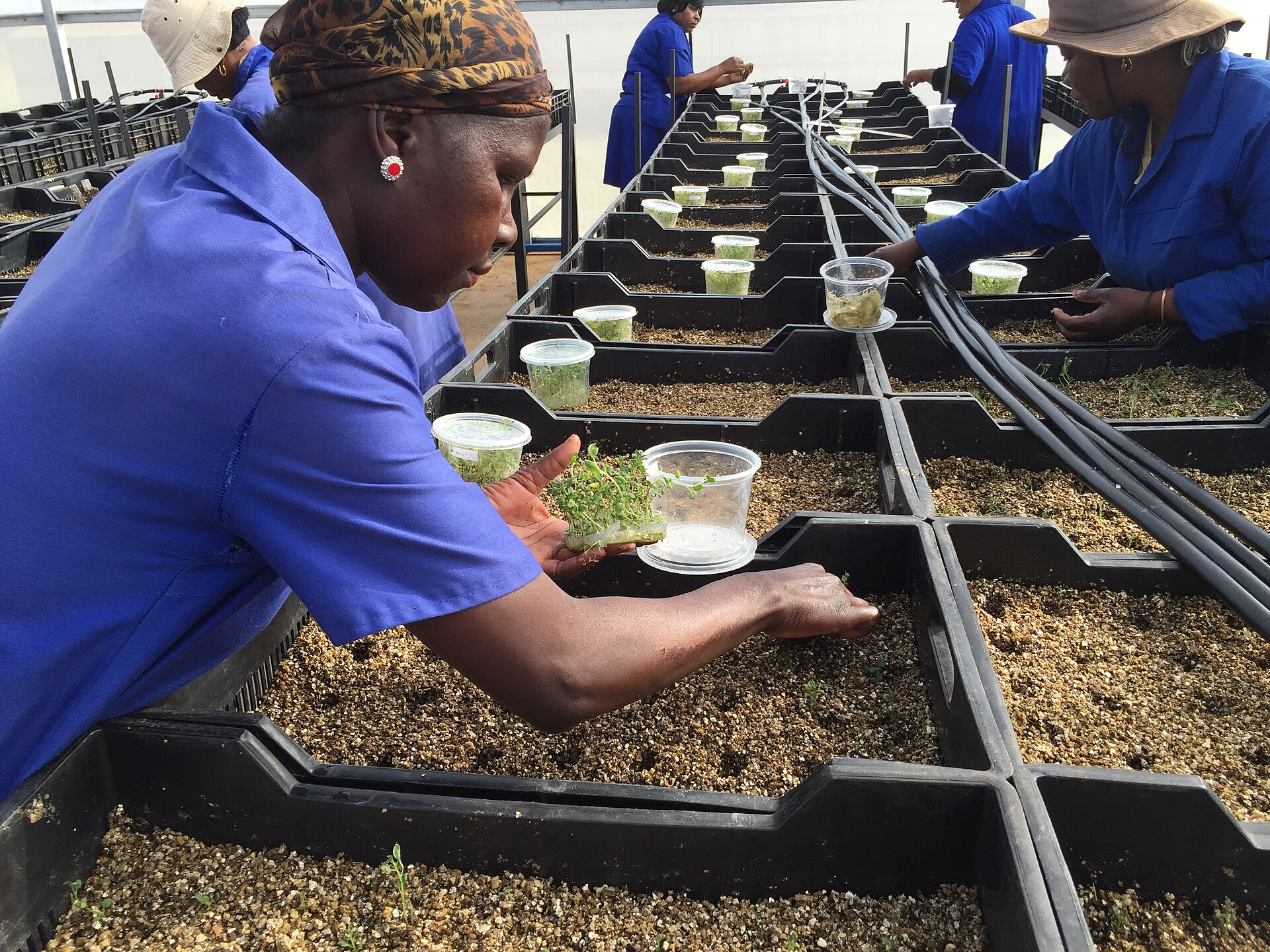
Photo: Planting seed potatoes (illustrative). Philippus Jacobus Steyn / Cómhaoin Wikimedia, CC BY-SA 4.0
Achoimre Prátaí Domhanda
Cúig scéal is fearr, praghsanna, foláirimh galair agus imeachtaí. Maidineacha laethanta na seachtaine, gan aon fhógraíocht.
foinsí
- University of Idaho, CIS 1031 Potato Seed Management: Seed Size and Age (1995) — https://seedcert.oregonstate.edu/sites/seedcert.oregonstate.edu/files/pdfs/cis1031.pdf
- University of Maine Cooperative Extension, Bulletin #2412 Selecting, Cutting and Handling Potato Seed — https://extension.umaine.edu/publications/2412e/
- NDSU Potato Extension, Understanding Potato Stem Number — https://www.ag.ndsu.edu/potatoextension/knowing-stem-number-is-important
Nasctha san ábhar seo
- Country
- Domhanda
- Teicneolaíochtaí
- seed cutting; grow-out test; seed ageing control
Scéalta gaolmhara
An Aetóip: Aschur Prátaí Ardaithe Deich n-Iomad ó 2000 go 4.09 Milliún Tonna
Prátaí a Bhaintear sa Bháisteach: Conas an Barra a Thriomú agus a Choinneáil i Stóráil