Algeria: Potato Output Up 39% Since 2010 to 4.6 Mt on Yield Gains
Príomh-earraí beir leat
- 4.60 Mt of potatoes grown in Algeria in 2024, per FAOSTAT
- 39% rise in Algerian potato output between 2010 and 2024
- 33.9 t/ha average Algerian potato yield in 2024 (FAOSTAT)
- 40% of national output came from El Oued, per a 2017 study
Cén fáth a bhfuil sé tábhachtach
- Do phróiseálaithe
- Test contract supply from pivot farms, which reach high yields; secure storage first, because in-soil storage in El Oued lasts one to three months.
- Do sholáthraithe
- Plan seed allocations around the single annual import window and the main January–March planting; Algeria remains a large, import-dependent seed buyer.
- D'infheisteoirí
- Assess cold storage and processing in El Oued and the north; processing took under 1% of the crop in 2017, and stores in the desert zone were scarce.
Achoimre 60 soicind
Algerian potato farming has grown mainly through higher yields rather than more land. FAOSTAT records 4.60 million tonnes in 2024, about 39% above 2010, with yield rising from roughly 27 to almost 34 tonnes per hectare. Output peaked at 5.02 million tonnes in 2019 and dipped in 2021 and 2022. The desert province of El Oued is the engine: a 2017 Wageningen study counted around 35,000 hectares under small centre pivots and credited the region with about 40 percent of the national crop. Several planting seasons give near year-round supply, yet about 70 percent of seed is imported, mostly from the Netherlands, and less than 1 percent of the harvest was processed. Dutch seed houses, storage builders and fry or crisp processors are the groups most affected. The main caveat is age: the regional and seed figures date from 2017, while FAOSTAT is current to 2024, and desert aquifer water is a long-term limit.
Algeria produced 4.60 million tonnes of potatoes in 2024, according to FAOSTAT. In 2010 it produced 3.30 million tonnes. That is an increase of about 39%.
Most of the growth came from yield. The average yield rose from 27.1 t/ha in 2010 to 33.9 t/ha in 2024. The implied harvested area in 2024 was about 135,000 hectares.
The trend was not smooth. Output peaked at 5.02 million tonnes in 2019. It fell to 4.32 million tonnes in 2022 and recovered to 4.66 million tonnes in 2023. The 2024 figure was slightly lower again.
Laethanta na seachtaine. Díliostáil le cliceáil amháin.
The desert pivot model
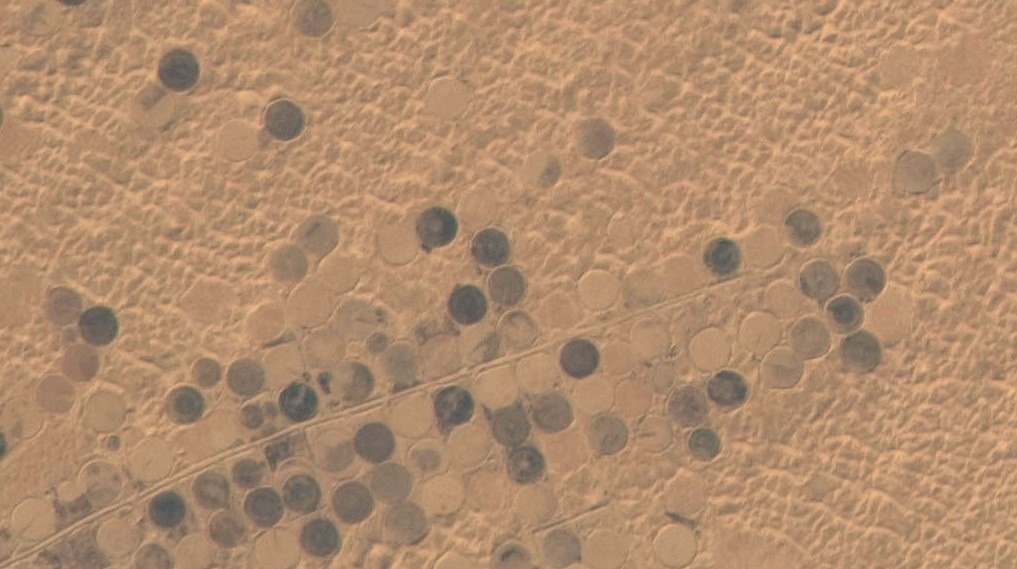
A large part of the gain comes from El Oued, a Saharan province. A 2017 Wageningen Research report studied the region. It found about 35,000 hectares of potatoes and roughly 47,000 registered farmers there. The report said El Oued supplied around 40% of national production.
Farms in El Oued use centre pivots of about 0.9 hectares. Most growers run 5 to 10 pivots. The same report counted more than 120,000 permanent and seasonal jobs linked to the crop.
The coastal and northern regions remain important. The warm climate allows several seasons per year. The main season is planted from January to March. A late season is planted in August or September and harvested in December.
Seed, storage and processing gaps
Algeria still depends heavily on imported seed. The Wageningen report estimated this dependency at about 70%, mainly from the Netherlands. Seed is imported once a year.
Storage is the second weak point. The state runs a regulation scheme called SYRPALAC. It supports storage of surplus potatoes to smooth prices between seasons. The same report noted few stores in El Oued, where tubers are kept in the soil for one to three months at most.
Processing is small. According to the 2017 report, less than 1% of Algerian potatoes went to factories.
Cén fáth a bhfuil sé tábhachtach
Algeria is now one of the largest potato producers in Africa, behind Egypt. Its yields match many European countries. But the system depends on imported seed and on irrigation water in the desert. For seed exporters, the market is large and seasonal. For processors, the low processing share leaves room for growth, if stable supply and storage can be secured.
Photo: Centre-pivot irrigated fields around El Oued, Algeria, seen from space (illustrative). NASA / Cómhaoin Wikimedia, Fearann poiblí
Achoimre Prátaí Domhanda
Cúig scéal is fearr, praghsanna, foláirimh galair agus imeachtaí. Maidineacha laethanta na seachtaine, gan aon fhógraíocht.
cad eile
FAOSTAT 2025 data will show whether output recovers towards the 2019 peak. Seed exporters and processors will watch storage investment and SYRPALAC activity.
foinsí
- FAOSTAT, Barra agus táirgí beostoic (QCL) — https://www.fao.org/faostat/en/#data/QCL
- Ár nDomhan i Sonraí, táirgeadh prátaí (sonraí FAOSTAT) — https://ourworldindata.org/grapher/potato-production
- Ár nDomhan i Sonraí, toradh prátaí (sonraí FAOSTAT) — https://ourworldindata.org/grapher/potato-yields
- Wageningen Research, report WPR-693 (Houben, 2017) — https://edepot.wur.nl/459592
- Wikipedia, Potato production in Algeria (secondary) — https://en.wikipedia.org/wiki/Potato_production_in_Algeria
- ODINN ISTOCHNIK
Nasctha san ábhar seo
- Country
- an ailgéir
- Cuideachtaí
- Wageningen Research; SYRPALAC
- Teicneolaíochtaí
- centre pivot irrigation; seed import; storage regulation
Scéalta gaolmhara
Maracó: Aschur Prátaí Dúbailte go 2.19 Milliún Tonna ó 2000 agus Toradh ag Sroicheadh 32.8 t/ha
An Ailgéir: Allmhairithe Arizona Cosnaíonn Prátaí Síl Suas le Ceithre huaire Prátaí Síl Áitiúil